
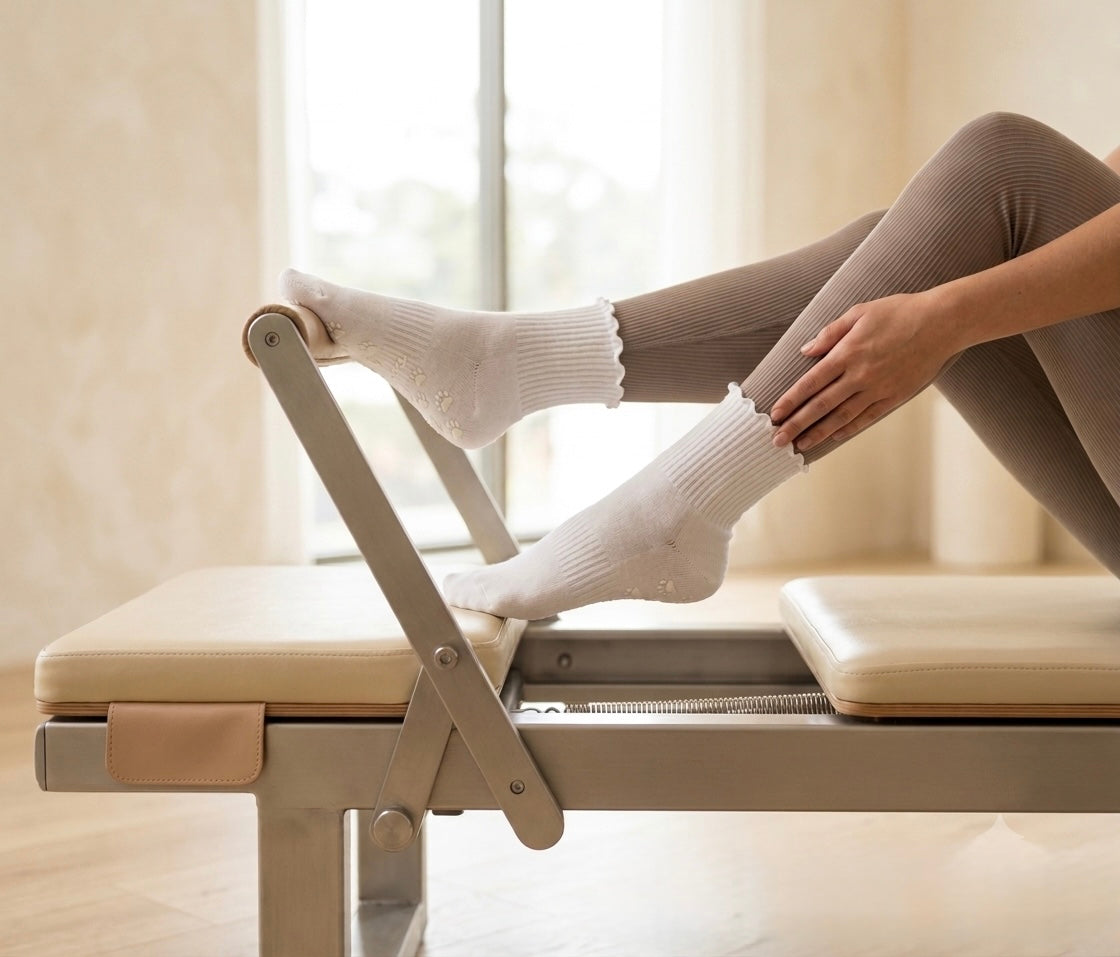
Do You Really Need Special Socks for Pilates? Here's What to Know
If you've taken a reformer or mat pilates class recently, you've probably noticed something: almost everyone in the room is wearing the same style of sock, thin, snug, with little rubber dots on the bottom. If you've been showing up in your regular gym socks, you might be wondering if grip socks are actually necessary, or just another studio trend. Here's what's actually going on.

Why grip matters more in pilates than in most other workouts
In a typical workout, your feet are usually planted flat and stationary, or moving in a controlled, repetitive pattern. Pilates is different. Reformer machines involve a moving carriage, and a lot of pilates work relies on precise foot positioning, whether it's pressing into a footbar, balancing on the edge of the reformer, or holding a pose on a mat where your heel needs to stay exactly where you put it.
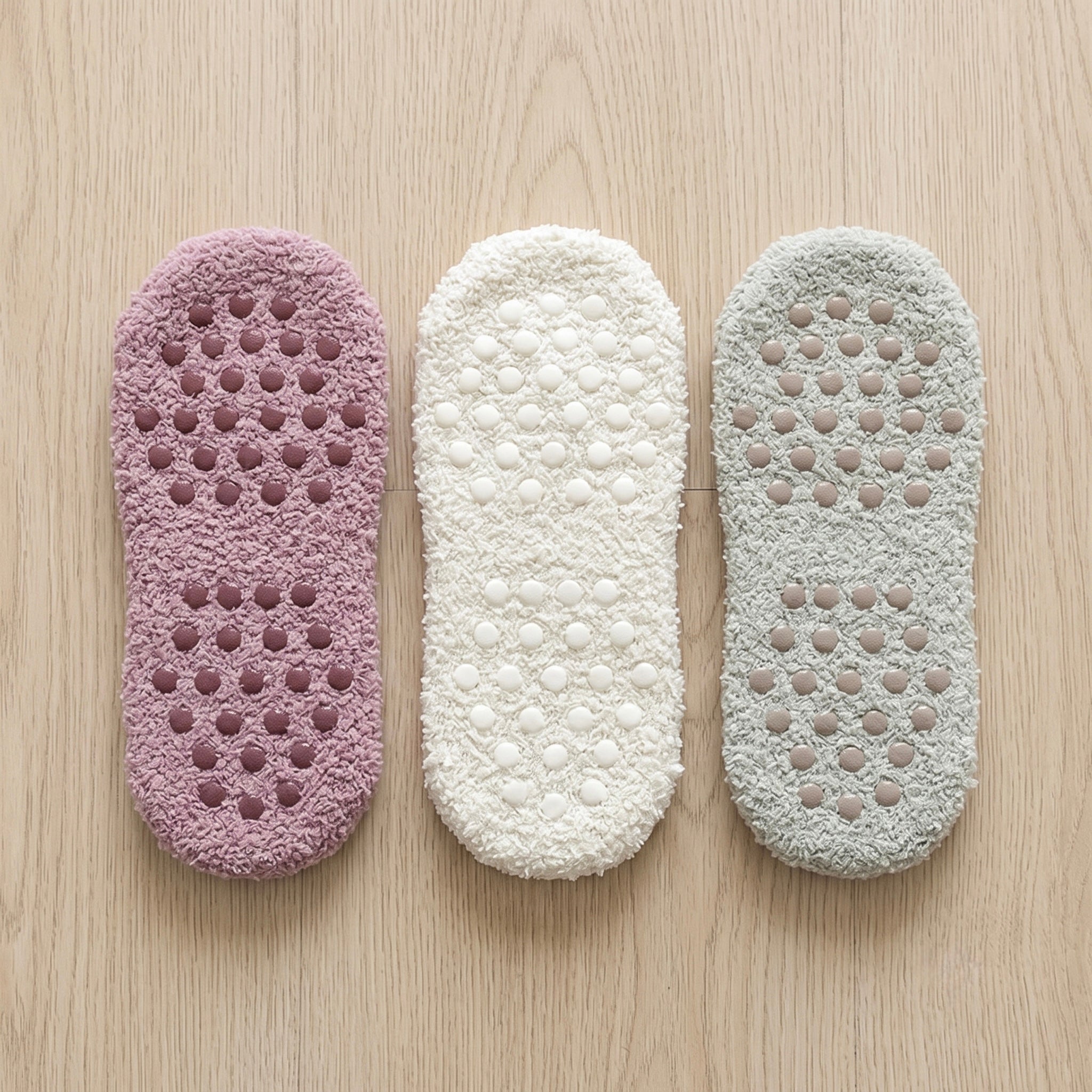
Bare feet can be too slippery on some equipment, and standard socks are often worse, since the smooth fabric on the sole has almost no traction against vinyl, leather, or laminate surfaces. That's where grip socks come in. Small silicone or rubber dots on the sole increase friction just enough to keep your foot from sliding when it matters most, without restricting the natural flexibility your foot needs during the movement.
What makes a good pilates grip sock
Not all "grip socks" are built the same. A few things worth checking:
Fit: A snug, low-profile fit matters more here than in regular socks. Bunching fabric can interfere with foot positioning on the reformer footbar or straps.
Grip placement: Good grip socks have dot placement across the ball, arch, and heel of the foot, not just the toes, so you get traction no matter how your foot is positioned during a move.
Breathability: Since pilates sessions can run 45 minutes to an hour with continuous movement, breathable, moisture-wicking material matters for comfort, especially in warmer studios.
Material softness: Unlike heavy athletic socks, pilates grip socks are usually made from a lighter, closer-fitting knit so they don't add bulk inside your usual studio shoes (if worn) or interfere with barefoot-style stretches.
Do you actually need them, or is it optional?
Many studios that offer reformer pilates actually require grip socks for safety and equipment reasons, both to protect you from slipping and to protect the equipment's leather or vinyl surfaces from oil and sweat that bare feet leave behind. Even in studios where it's optional, most instructors recommend them, simply because the improved stability lets you focus on form instead of worrying about your footing.
If you're just doing mat-based pilates at home, grip socks are less of a strict necessity, but many people still prefer them over bare feet or regular socks for the added stability during balance-focused moves.
The takeaway
Grip socks aren't just a studio accessory, they solve a real, practical problem: keeping your feet stable on equipment that wasn't designed for bare feet or slippery regular socks. If you've been pilates-curious but unsure whether special socks are worth it, the short answer is yes, especially if reformer work is part of your routine.
Ready to try a pair? Shop our Grip Yoga/Pilates Socks, designed with targeted grip placement and a snug, breathable fit built for studio days.

Laisser un commentaire
Ce site est protégé par hCaptcha, et la Politique de confidentialité et les Conditions de service de hCaptcha s’appliquent.